
UX Research and Human Factors
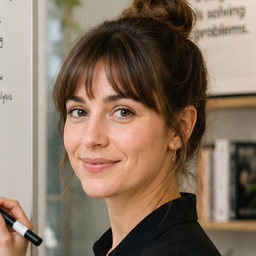 Curated and verified bySofia Williams, UX Researcher, Stripe
# Why Take This Course You are not your user. Your instincts about what users want, what frustrates them, and what they'll do next — those instincts are usually wrong. That gap between what you think and what actually happens is where products fail: the feature nobody uses, the checkout flow that confuses everyone, the button label that makes sense to the designer but baffles real people. UX research closes that gap. Not surveys that ask people what they'd prefer. Not focus groups where people say what they think they should say. Real research — interviews that reveal how people actually think, usability tests where you watch someone struggle with your flow, data that shows how often something actually happens. Research is the reliable antidote to assumption. This course teaches you how to do it. You'll learn to plan a research study, run the right method for your question, synthesize raw findings into patterns and actionable insights, and convince skeptical stakeholders that you found something real. Interviews, usability testing, surveys, A/B tests, diary studies, accessibility research — each has a time and place. You'll know when. You'll also learn what research can't do: one study is a hint, not proof; small samples reveal patterns but don't let you generalize to everyone; correlation is not causation. Humility about findings' limits is as important as the findings themselves. The course is grounded in real methods and real constraints. You likely don't have months and a research team — you have a sprint and yourself. So you'll learn practical tradeoffs: fast, imperfect research now is often better than perfect research that arrives too late. And you'll learn to scale: what one person can run solo, how to coordinate with a team, when to bring in a specialist, how to build a research culture that doesn't treat users as a feature request box. Throughout, ethics comes first. Recruiting without consent is not research, it's exploitation. Data you collect carries responsibility. Designing patterns that deliberately manipulate users is harm — even if it increases conversion. Research as a craft means serving users while serving your product. By the end, you won't be a professional researcher (unless you want to be). You'll be a product person who can ask the right question, design a study to answer it, make sense of what you learn, and build products grounded in evidence. That's the real skill — and it's learnable.
Lessons
About the course creator
At the beginning of a product cycle, Sofia Williams listens: she conducts contextual interviews, observes workflows, and uses diary studies to understand problems that have not yet been clearly defined. As ideas become prototypes, she shifts to concept testing, usability sessions, journey mapping, and accessibility research; after launch, she turns to surveys, experiments, behavioral data, and longitudinal studies to see whether the product works beyond the testing room. Sofia has led research for consumer apps, enterprise software, and AI-assisted tools, built participant panels and insight repositories, and coached product teams on choosing methods that match the decision at hand. Her contribution is not simply a collection of findings, but a disciplined way of helping organizations decide what to build, what to revise, and what evidence they still need.
Reviews (15)
- bright_manatee
really useful
- vigilant_hornet
学到了很多,谢谢!
- lush_firefly
super clair
- electric_macaw
讲得很清楚,很喜欢。
- witty_marten
muy útil