
Food Science, Safety, and Quality Control
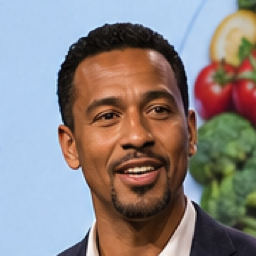 甄選並驗證:Imani Rhodes, PhD, Brown University
Food safety is not magic—it's science applied to operations. Whether you're running a production line, launching a food business, or managing quality at a facility, the same principles protect every product: understand what causes spoilage and contamination, design controls that stop it, prove the controls work, and document everything. This course teaches you how to think about food safety like a professional. You'll learn the science (why water activity and pH matter, how Listeria behaves at refrigeration), the frameworks (HACCP and HARPC—the methods every facility uses), and the operations (testing, corrective actions, recalls, audits). You'll move from "we've never had a problem" to "we can prove this is safe." The course is built for production workers who monitor critical points, quality staff who design testing programs, entrepreneurs planning their first facility, and professionals entering food-safety careers. It assumes no chemistry background. What you'll get is practical: you can walk into any food operation and apply the same systematic thinking. Each lesson focuses on one capability: identifying hazards, running a hazard analysis, selecting the right processing method, interpreting test results, managing suppliers, responding to an incident, preparing for an audit. The worked examples use real scenarios—thermal processing of canned soup, cold-chain shelf-life of deli meat, allergen segregation in a mixed facility—so you see how the frameworks work in practice. By the end, you'll understand the regulatory landscape (FSMA, SQF, BRC, ISO 22000), know how to design a food-safety plan from scratch, and be ready to defend your controls to an auditor. You'll also know where the science is solid ground truth and where it's an estimate—so you can make sound decisions under uncertainty, not memorize rules. Food safety is your responsibility the moment you touch a product. This course gives you the knowledge to do it well.
課程目錄
關於課程作者
Measure the diet. Test the mechanism. Check whether the conclusion still holds beyond the laboratory. That is how Dr. Imani Rhodes approaches nutrition science. Her work moves between controlled studies, population datasets, hospital programs, and pilot-scale food trials, drawing on biochemical assays, dietary assessment, regression modeling, sensory testing, and systematic literature review. She has contributed to nutrient-focused product formulations, evaluated safety and labeling evidence, designed culturally responsive nutrition interventions, and translated technical findings for clinicians, regulators, product teams, and community organizations. Rather than presenting nutrition as a collection of simple rules, Imani is known for separating promising hypotheses from demonstrated effects—and for turning uncertainty into a useful next research question.
評價 (13)
- fiery_barista
很有帮助,赞👍
- savvy_vulture
nice
- mirthful_pike
love it
- playful_dancer
👍
- lucky_cartographer
super clear and practical